
Doug's Mountain Journal
A Chronicle of Natural History on San Bruno Mountain
Doug Allshouse has been writing his seasonal Mountain Journal for many years. We are very pleased to share his reflections on the natural history of the Mountain. Together with David Nelson, he wrote San Bruno Mountain: A Guide to the Flora and Fauna. The book was published by Heyday Books in November 2022 and can be purchased here.
Autumn 2025
I’m goin’ where them chilly winds don’t blow
Gonna find a true love, that is where I want to go
Out where them chilly winds don’t blow *
But blow they did the first two weeks of December. Let’s face it! We who live on or near the coast put up with the dreary conditions of gray skies and summer fog and look forward to autumn as our salvation. Contrary to what we expect of our Fall weather, this autumn has been cooler, wetter, and foggier than usual, and downright cold as we edge closer to the Solstice. It should not be a surprise given that spring and summer were also cooler. For the first time in several decades, rainfall occurred in July, making it the wettest July during that period. September, October, and November had 68 days totaling 5.34 inches of rain and fog that quenched the thirst of our hardy native plants.
A high-pressure cell settled just off the coast and blocked Pacific storms sending them north into Oregon and Washington. An inside slider low-pressure cell slowly moved south over the Sierra Nevada. and has sent cold northeast winds and nippy days our way. Those cold conditions in the Central Valley created tule fog and the winds moving from the east to the west brought vast amounts of fog to the coast. For several weeks the wind blew in the opposite direction as the American flag by the ranger kiosk demonstrated so well.
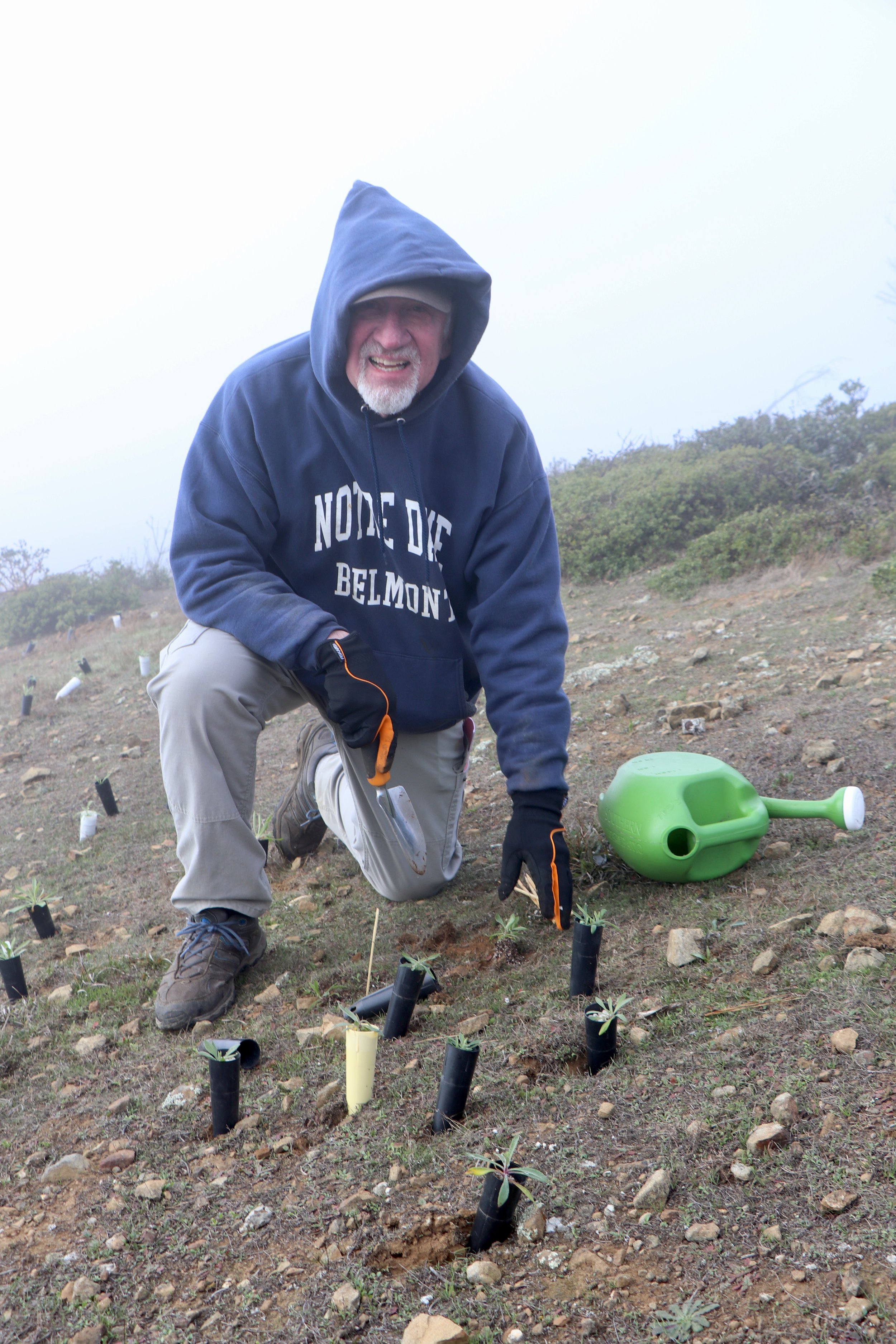
On Saturday, December 6, I was on the summit with fifteen other volunteers with Mountain Watch planting 200 rare San Francisco campion (Silene verecunda) plants in high winds and fog, and it was totally weird to see the fog blowing the opposite way; toward the ocean! Just a few days before the Solstice a storm system finally moved the stubborn high-pressure cell out of the way and opened the storm door.
Autumn 2024 was the start of an impressive restoration of the upper Bog Trail that included the removal of cotoneaster, eucalyptus, English and Algerian ivy, and gorse. It sparked a commitment from me to continue removing invasive non-native plants. One of my new projects in the eucalyptus grove between the Bog and Old Guadalupe trails is removing eucalyptus sprouts and cutting shoots that stump-spouted from small trunks that were cut to the ground last year but were not treated with herbicide. The gorse is sprouting from untreated trunks, and I have seen several French brooms. So far, I have pulled over two hundred eucalyptus spouts with more on the way. Nature never quits.
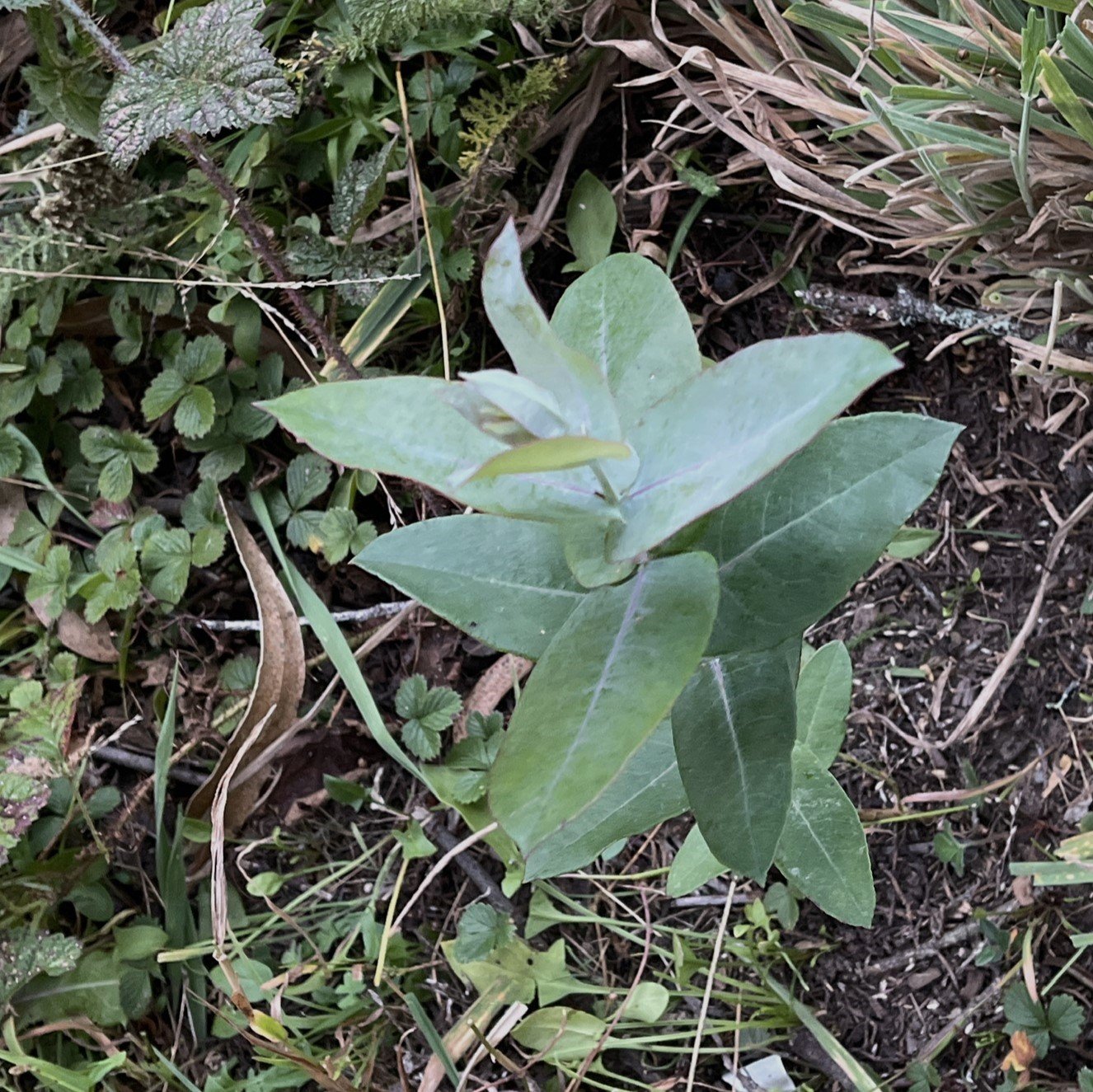
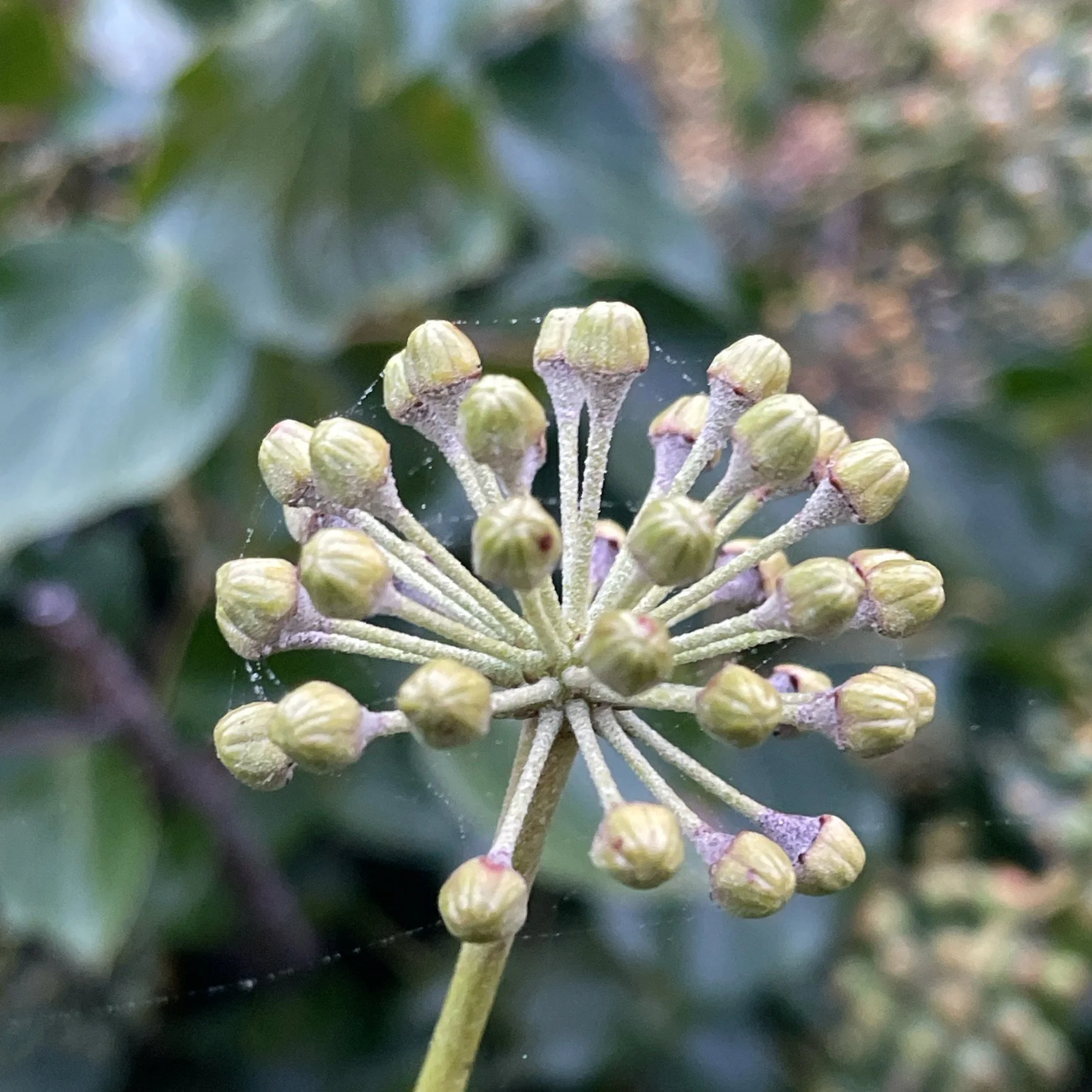
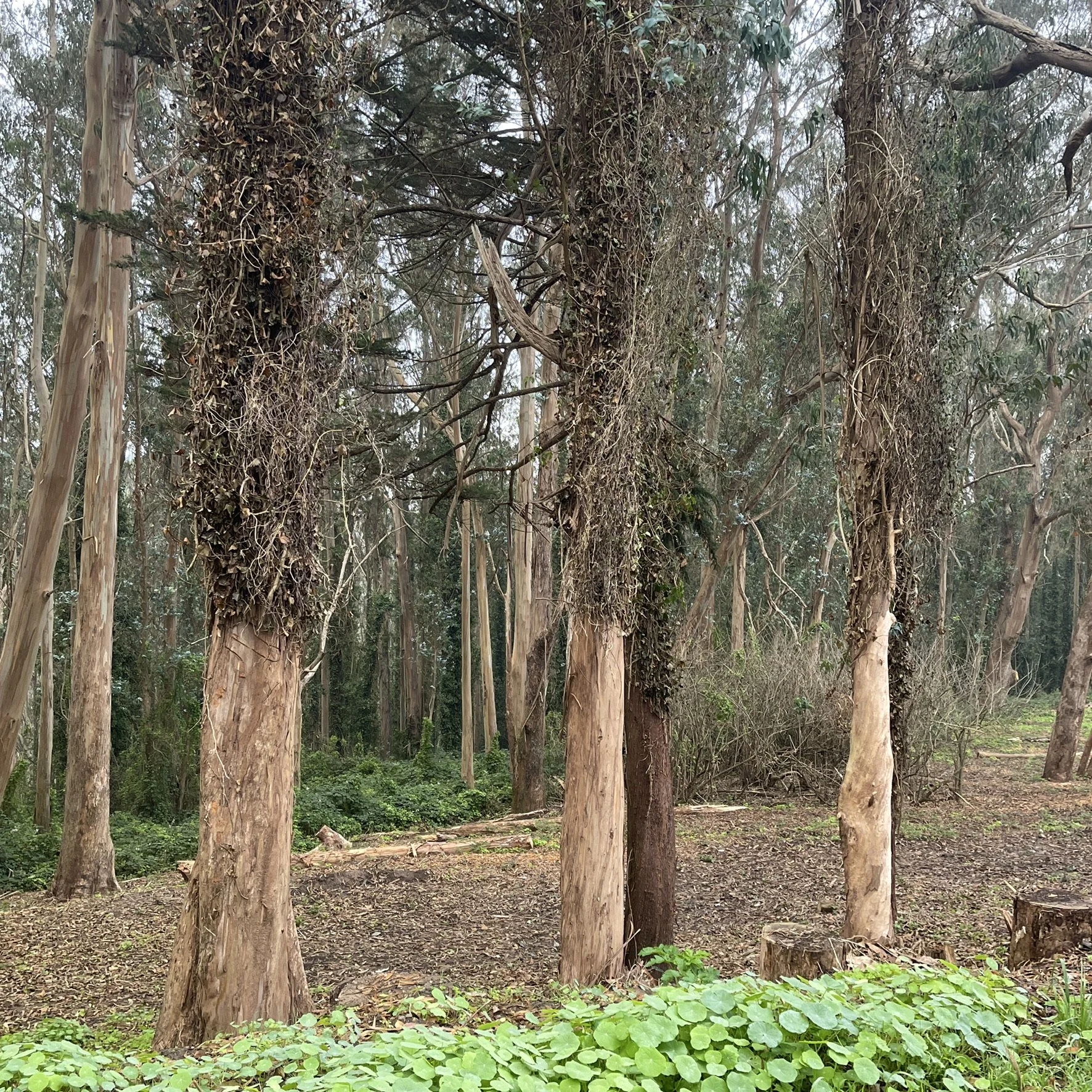
In late September of this year another colossal project involving Go Native resulted in removing more eucalyptus trees and killing the ivy on the trunks. They also removed a lot of Himalayan blackberry and cleaned up a few acres of brush. Much of the work involved reducing fire hazards and falling branches along Crocker Avenue and the first four hundred feet of the Old Guadalupe Trail inside the Crocker Gate entrance. Removing Ivy from the trunks is essential to halting the spread of this horrible vine. When the vine gets off the ground by climbing up trunks or walls, it eventually produces flowers and fruit that birds consume and distribute the seeds through droppings. The inflorescence is a spherical collection of flower stalks that is common to the Ginseng family. The original plan was to cut every eucalyptus tree with a trunk ten inches in diameter or less all the way down to Guadalupe Canyon Parkway. That proved to be a much taller task than the budget allowed. Nevertheless, it made a stunning difference by providing more open space and vistas.
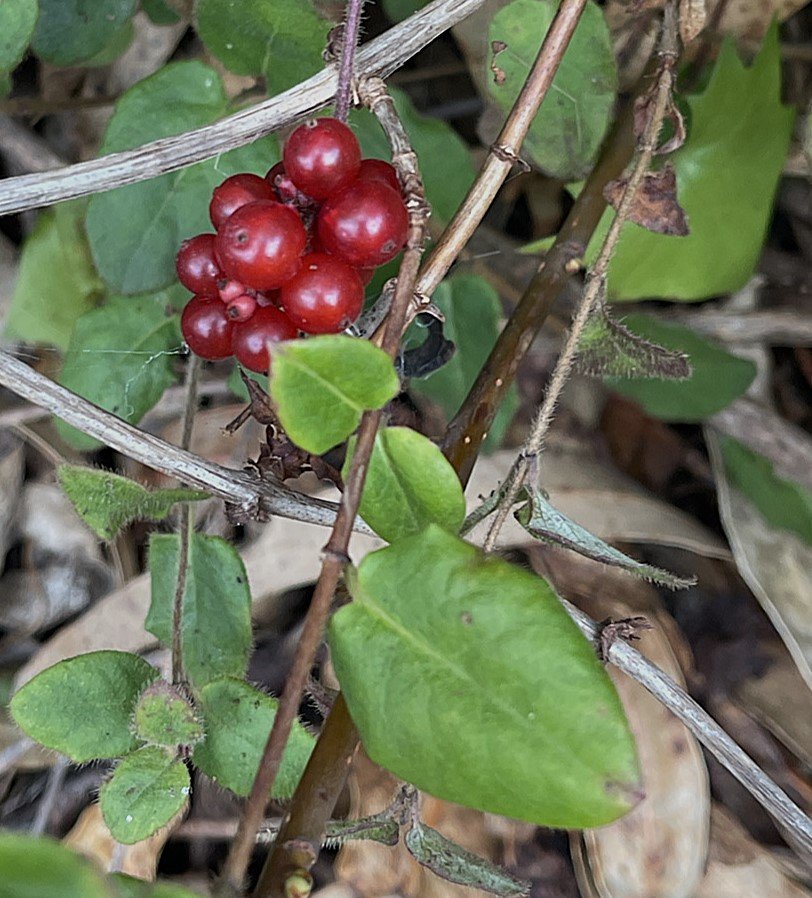
Autumn on the coast generally lacks the explosion of foliar colors that appear in other parts of the country or the Sierra Nevada. Fortunately, we have plants that bloom in late summer and fall. California honeysuckle (Lonicera hispidula) is a climbing vine that produces translucent red berries that feed birds arriving on the Mountain for the winter. Fall is also a time for California aster to show off. It used to be scientifically known as Aster chilensis, simple enough, but NOOOO, the taxonomists had to rename it Symphyotrichum chilense, Greek for borne or growing together and referencing its birthplace in Chile.
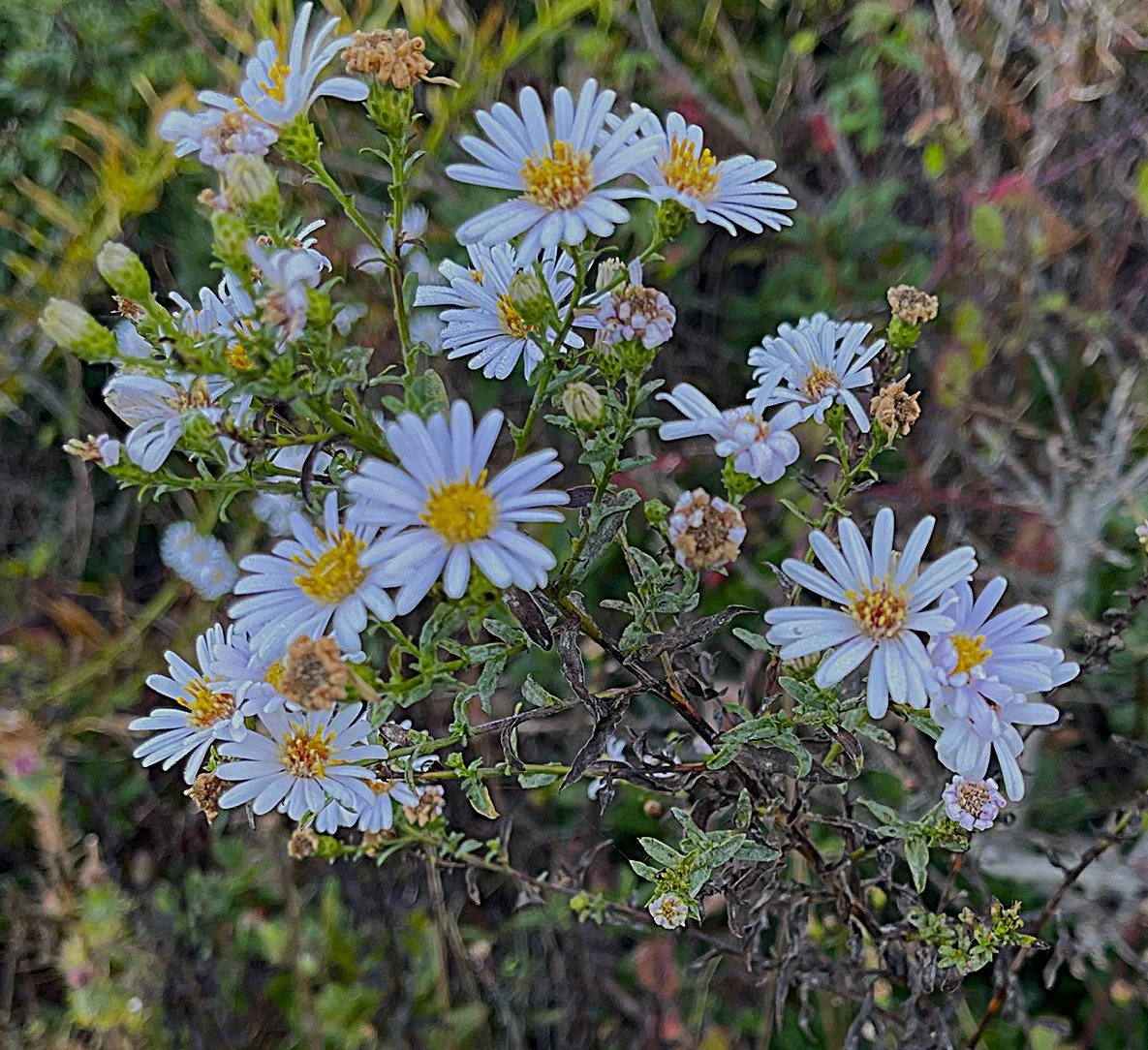
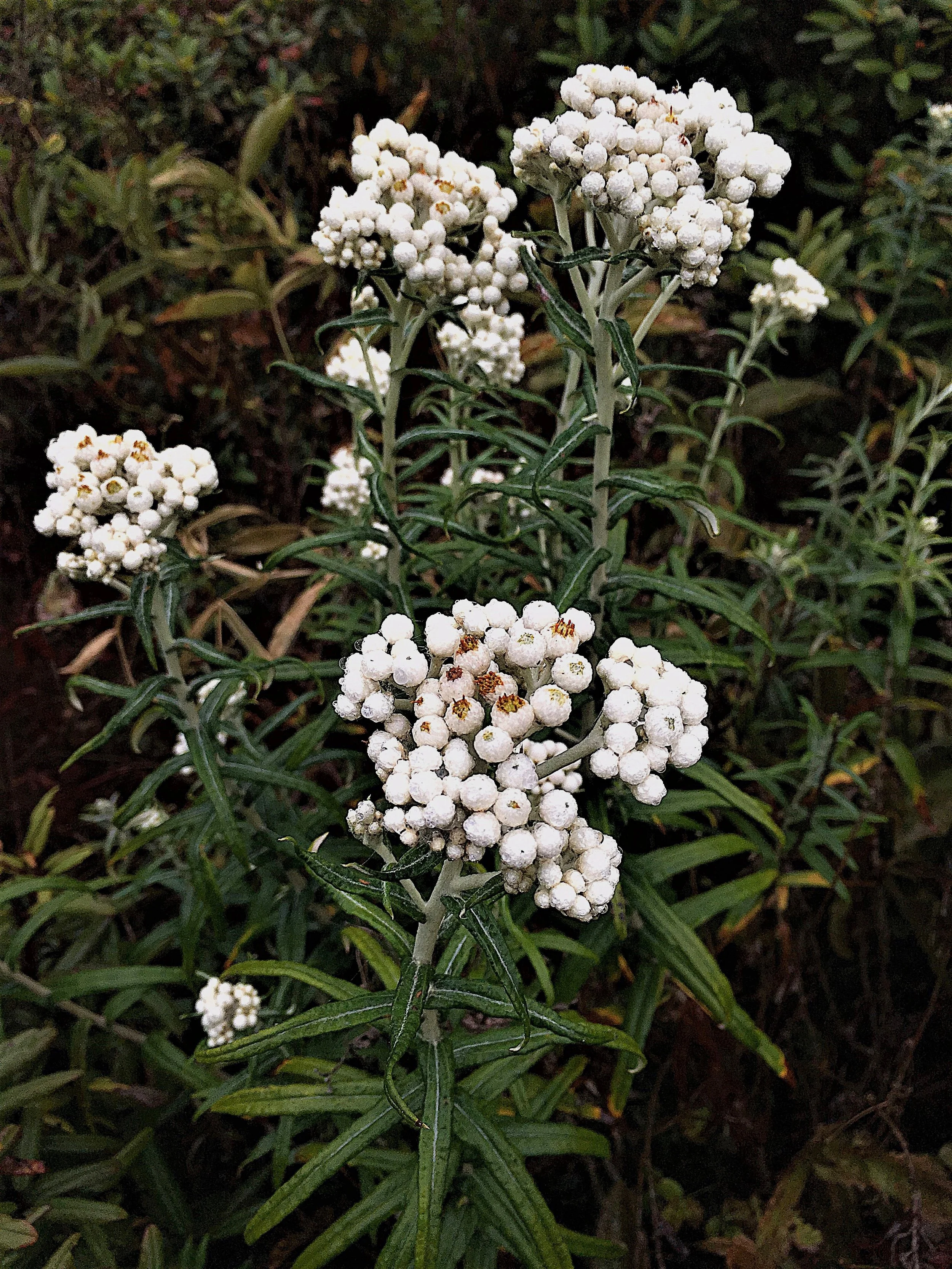
This aster and beach strawberry (Fragaria chiloensis) have a distribution in the temperate zones on either side of the equator, but not in the tropics. This phenomenon is known as neotropical disjunct. Try that on your next gathering of friends. The aster flowers are white to violet in color, and it favors moist places. It is rhizomatous, which guarantees that you will see many plants and flowers bunched together. The same can be said for pearly everlasting that treats us to long-lasting blooms of pearly white flowers. This herbaceous perennial can grow to a meter tall on a white, densely hairy stem. It is related to cudweed species also referred to as everlastings because the plants can be cut and dried. There are many patches on the Saddle and in the Great Meadow on Radio Road. However, there is a very impressive patch on the Old Guadalupe Trail near the Day Camp.
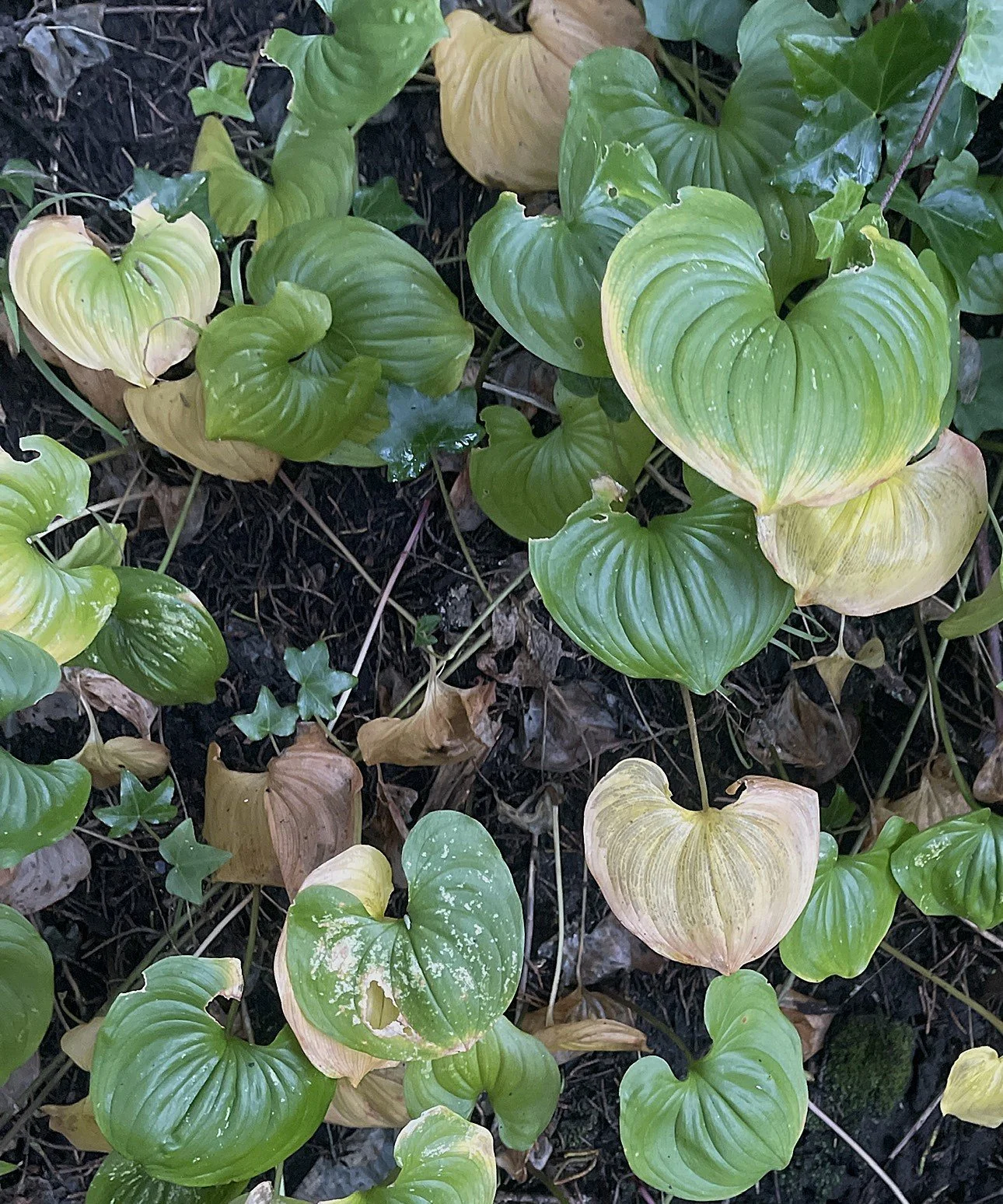
False lily-of-the-valley or two-leaved Solomon’s seal (Maianthemum dilatatum) owes its name to being a May flower with broad leaves. There are three locations on the lower Bog Trail within twenty feet of the lower bridge over Colma Creek. I mention it because at this time of the year the ground should be bare due to its habit of going dormant. For reasons unknown to me, it has decided to experience autumn and winter in each location. As I recall, there was not a single bloom this last spring. Admittedly, even in good years they are not prolific bloomers, and they have never produced fruits. This is the only surviving population after a smaller population disappeared years ago in Buckeye Canyon above the creek near the shellmound.
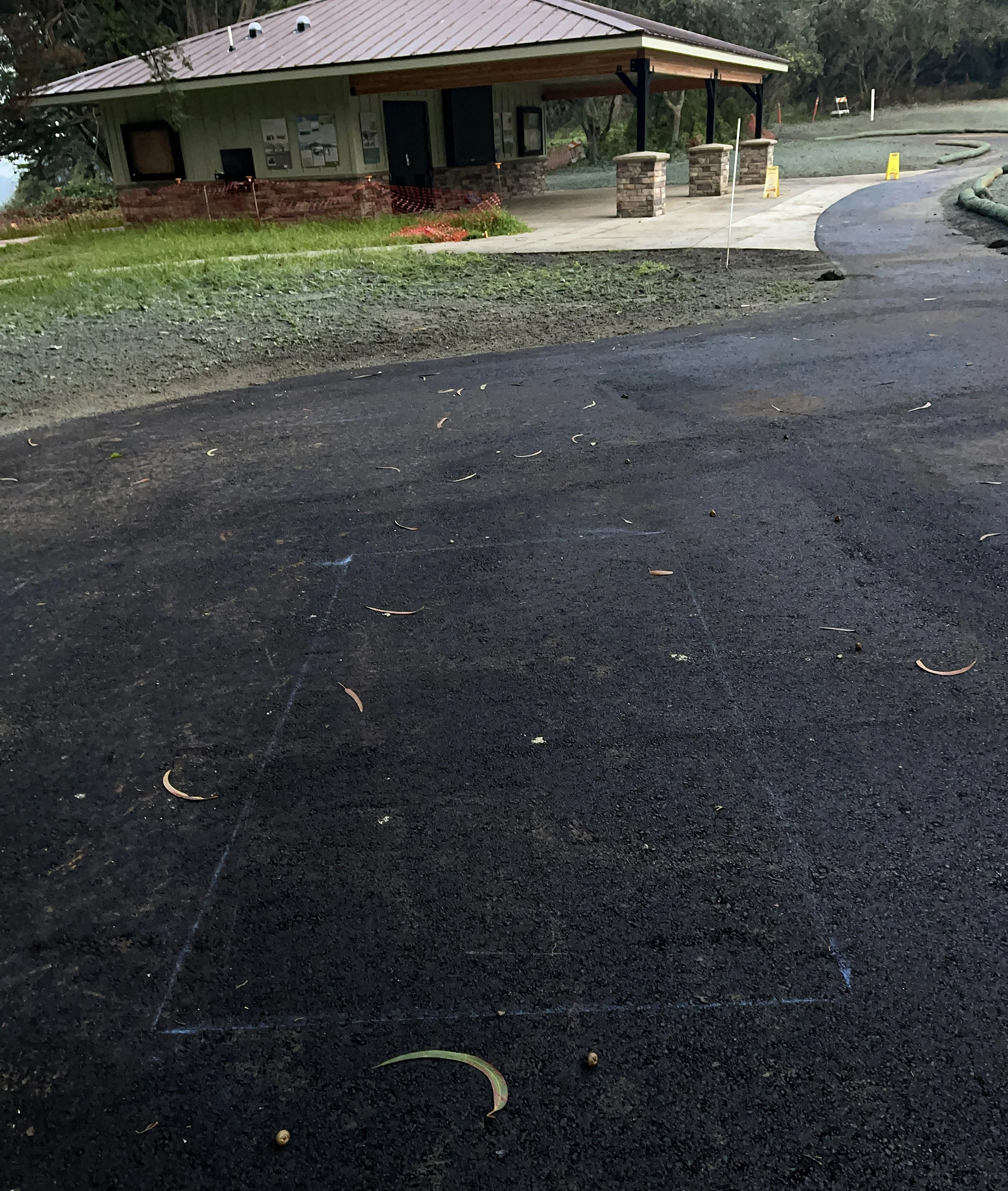
The picnic meadow project is nearing completion. The restrooms and interpretive pavilion were finished in late August and there is some interpretive material mounted on the walls. Meandering trails of asphalt with round-abouts and cutouts for picnic tables and benches are completed and are ADA approved. When those tables and benches are installed, we can have an opening ceremony. Meanwhile, let us trade some persistent fog and frigid temperatures for meaningful amounts of rain and cozier temperatures in the coming months. My anticipation grows by the day to see what's in store for winter.
*Many thanks to the late John Phillips (Mamas and Papas) and to a dear friend, the late John Stewart (Kingston Trio), who co-wrote Chilly Winds. Google it. It is a pretty song.
See you on the Mountain!
Doug