
Doug's Mountain Journal
A Chronicle of Natural History on San Bruno Mountain
Doug Allshouse has been writing his seasonal Mountain Journal for many years. We are very pleased to share his reflections on the natural history of the Mountain. Together with David Nelson, he wrote San Bruno Mountain: A Guide to the Flora and Fauna. The book was published by Heyday Books in November 2022 and can be purchased here.
Spring 2026
There are five Mediterranean Climate zones worldwide: most of Coastal California, Coastal Chile, the Mediterranean Sea, South Africa, and western Australia. They are known to have mild and wet winters and hot, dry summers. Outside of those areas winter is cold and harsh and covers the ground with snow. As spring approaches the cold dry air is suddenly warmed, and the snow has given way to balmy showers. The ground is visible once more and Mother Nature sends her blessings in the form of greenery and new leaves on trees. In our area winter generally supplies us with constant moisture and is our season of rebirth, replacing the skeletons of brown spent plants with infant plants sporting fresh green foliage.
Considering that March is loosely associated with lambs and lions, this year’s version was very much a lamb. Most of the month was calm, mild, and very toasty, setting record high temperatures in many cities around the Bay. The two severe drought years of 2019-2020 (15.59) and 2020-2021 (10.96) had 1.92 and 1.67 inches of precipitation in March. Only 0.21 inches of precipitation was recorded this year and 0.18 inches of that was fog drip, making this March the driest on my records going back to 2013. The flip side of this craziness was that last July 2025 recorded a quarter inch of rain, the first time that any July had rain in over two decades. With this weather season ending on June 30th, I am pleased to report that it was a stellar year, over three inches above high normal with 27.24 inches. This rain year also set a record for days of fog (169) and amounts (2.64 inches). The former leader was 2021-22 that had 94 days and 1.80 inches of fog precipitation in a year that had a total of 21.42 inches combined.
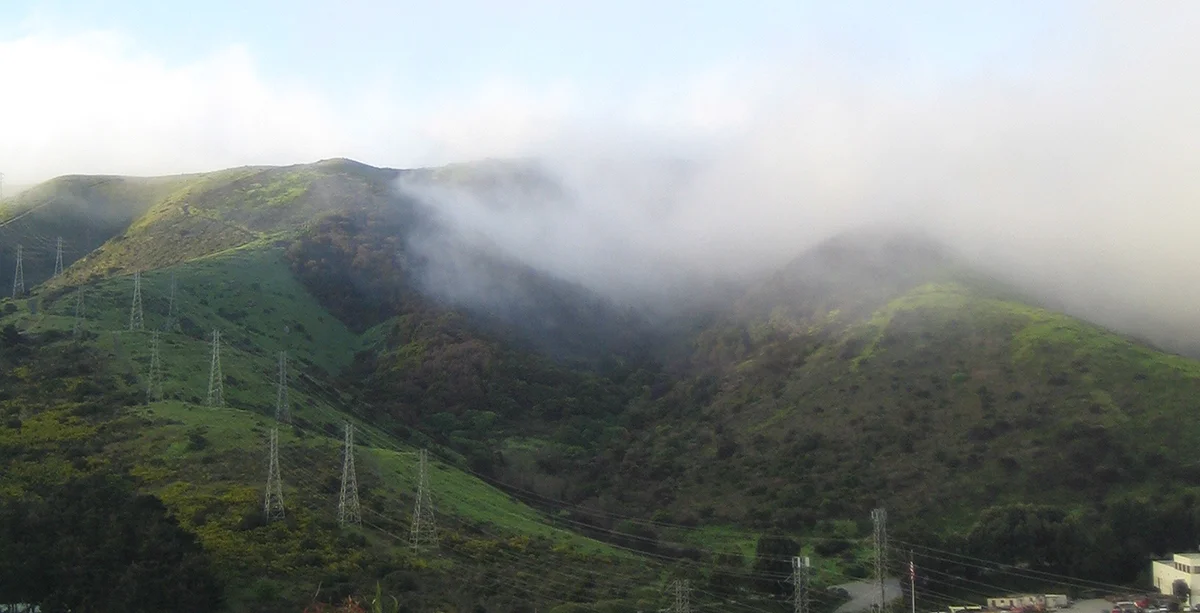
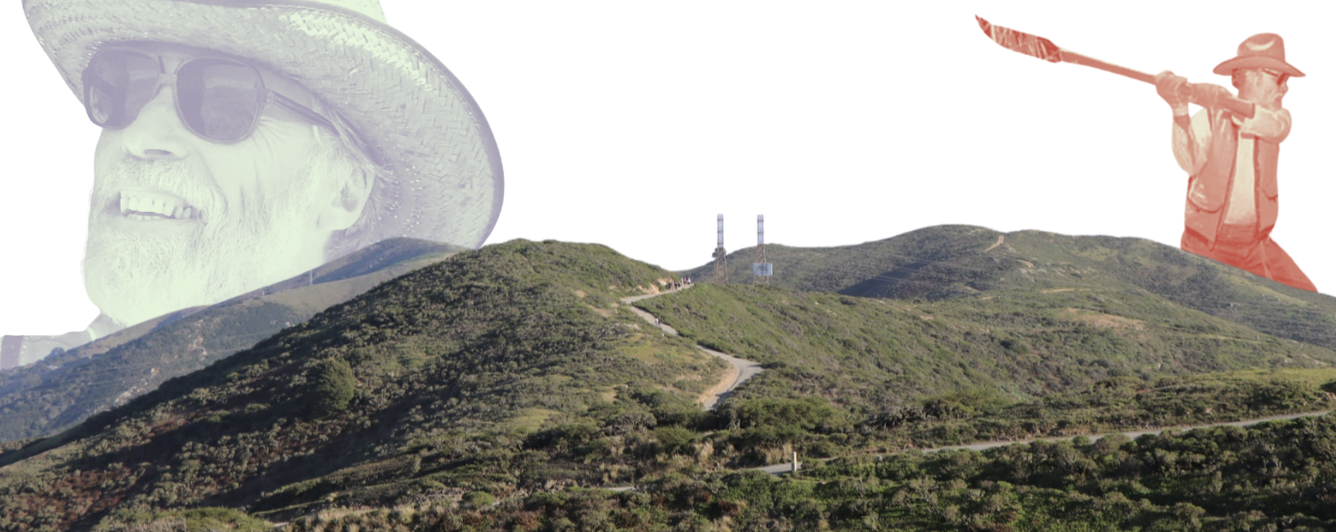
The Saddle, which is owned by the State, is home to the Saddle, Bog and Old Guadalupe (OGT) trails. I consider it my wild and spacious backyard where I do most of my morning walks. The OGT was the main thoroughfare from San Francisco’s Outer Mission to the summit of the Mountain when radio and communication towers were introduced, probably around 1948. I suppose that it was known as Radio Road back then. A fair amount of garden and weed plants were introduced into Fog Forest as discards thrown into the beds of pickup trucks from nearby neighborhoods or local greenhouses. Plants such as docks, wild radish, poison hemlock, Cape, English and Algerian Ivies, Italian lords and ladies, African flag, sow thistles, and Mediterranean onion to name a few. Some were most likely planted by individuals who just wanted to have something familiar to look at like forget-me-not, Calla lily, and paper white.
The task of dealing with these bad hombres keeps me busy every morning as I walk through the Crocker Gate for some exercise and tranquility. I simply cannot resist the urge to pull something out of the ground. Over the past ten years I have managed to control hemlock on the Day Camp Road to the point of achieving light maintenance where I am now dealing with fewer than 25 per year. Three years ago, I made a deep dive into extracting poison hemlock on the upper stretches of the Bog Trail near the OGT. I pulled 839 plants over the course of two weeks. The following year that number was 201 and this year it was 135. Three plants were over 10 feet tall!
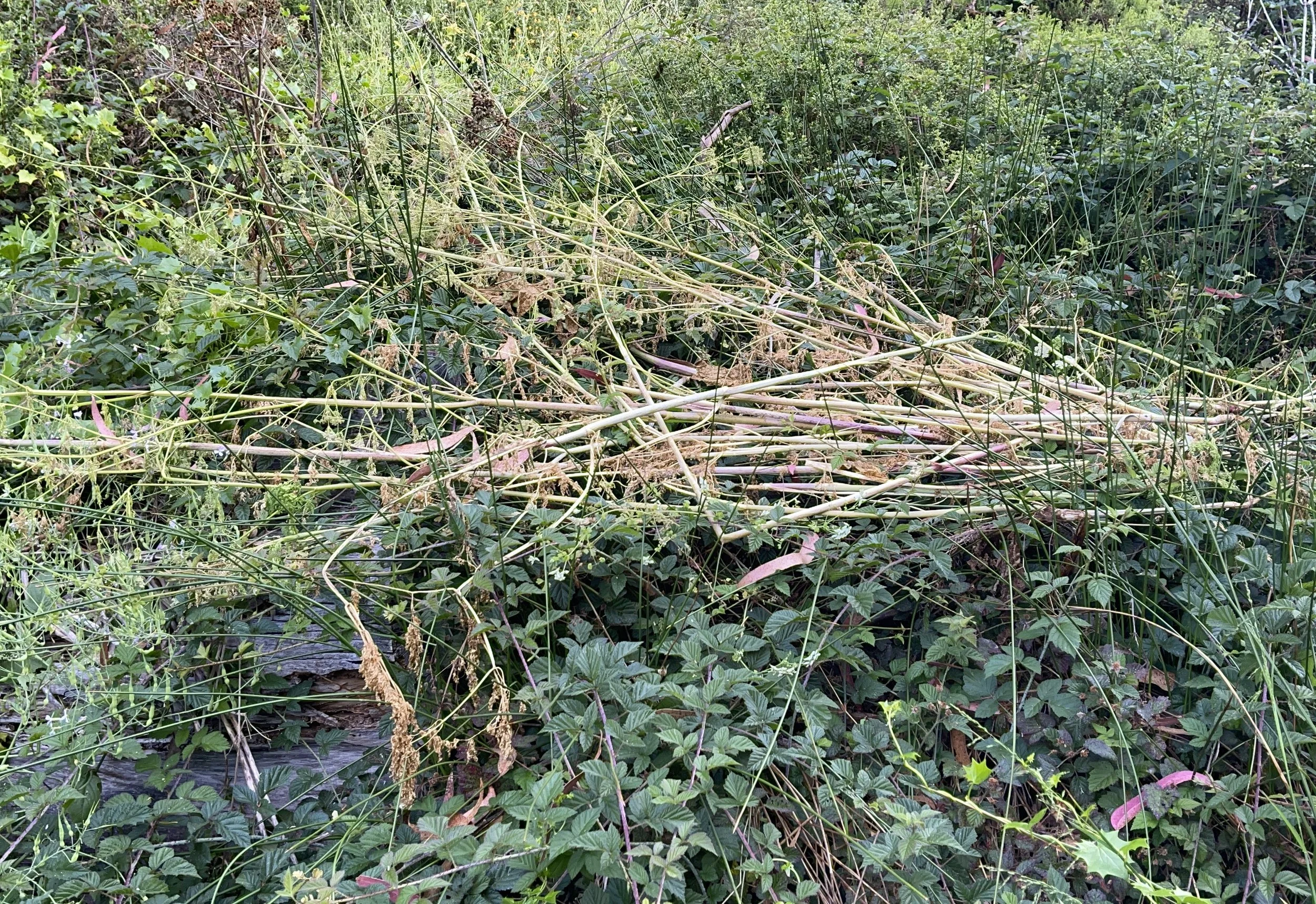
The habitat is riparian, near Colma Creek in rich sandy soil. Native plants include red elderberry, creek dogwood, arroyo willow, toyon, wax myrtle, cow parsnip, twin berry, Oso berry, bee plant, bracken, lady and sword ferns, and California honeysuckle. Mountain Watch has been planting a variety of natives along the access trail to further boost the native community. So that is also an incentive to rid the area of hemlock and radish each year. Hopefully in a few years that number will be less than 50.
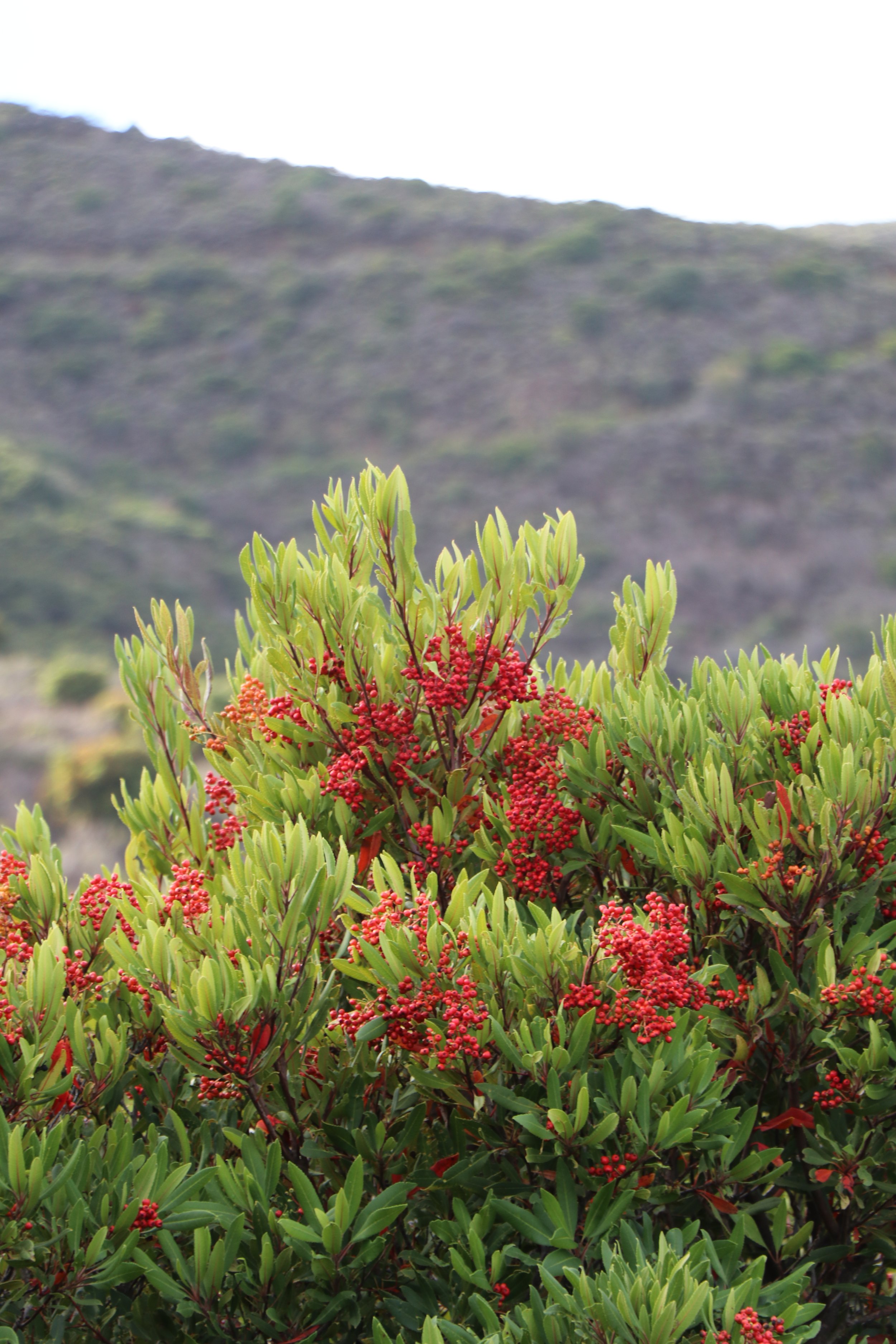
toyon

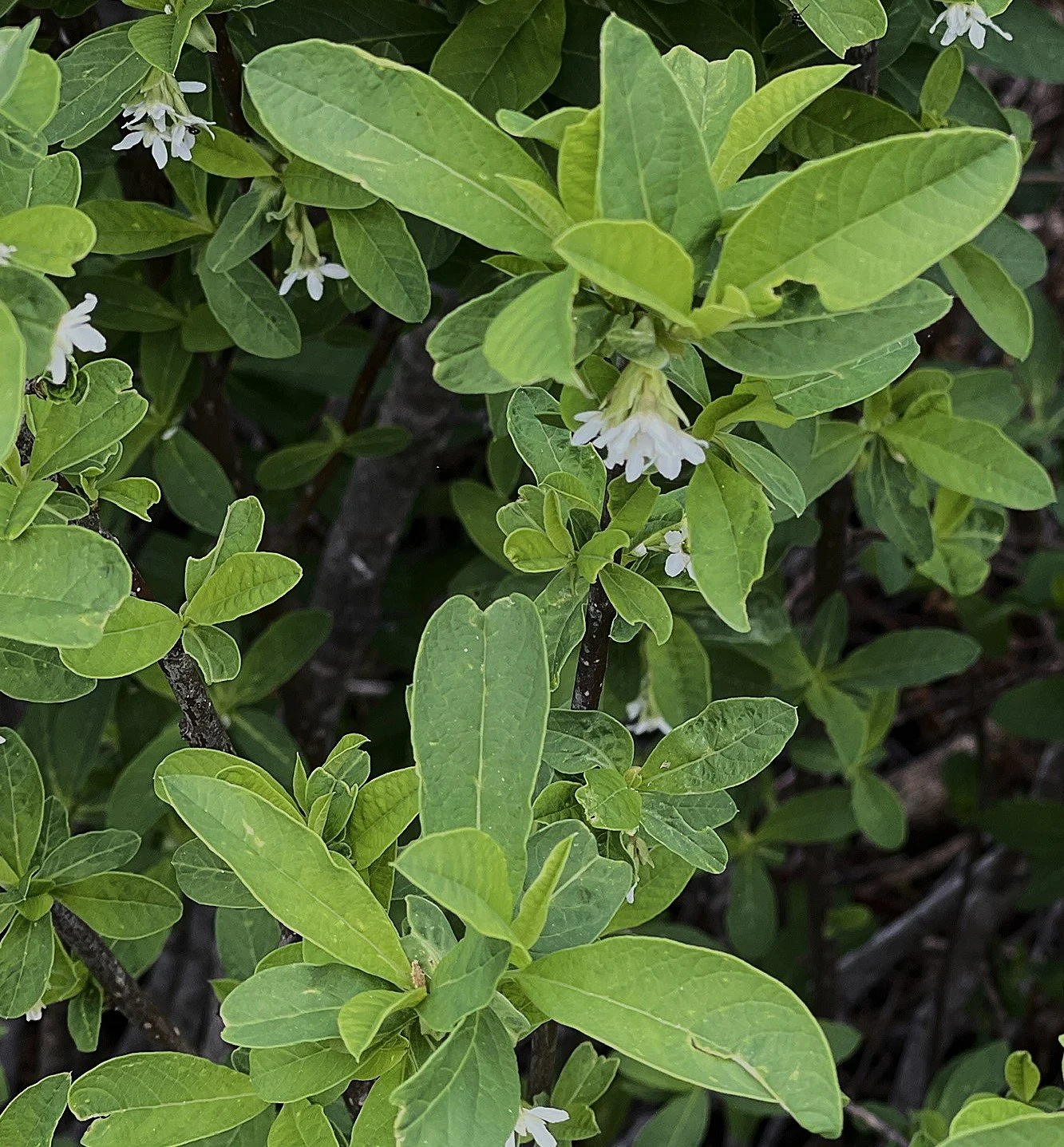
creek dogwood (above) oso berry (below)
Lately wild radish has become my obsession. The work on tree removal on the OGT over the past couple of years has stirred my desire to remove the radish before it gets totally out of hand. Its scientific name is Raphanus sativus) which means “quickly appearing” and “sown, cultivated”. It is in the Mustard family which is known for plants that are edible. The flowers (lavender, yellow or white) have four petals and have a delightful mild peppery taste, and the young one-inch fruits are skinny siliques (pods) that are sweet with a peppery punch. Radish is pretty and tasty, but it is wildly invasive. Luckily, it is relatively easy to extract from the soil, but occasionally it can be brutally stubborn. There also is hemlock in that area that I am dealing with. The state of maintenance requires continuous removal of the plant day after day until the area is devoid of the plant. If the plant is pulled before it has gone to seed, the seed bank is weakened, and you can expect fewer plants the next year. By the third or fourth year you should achieve a base for maintenance.

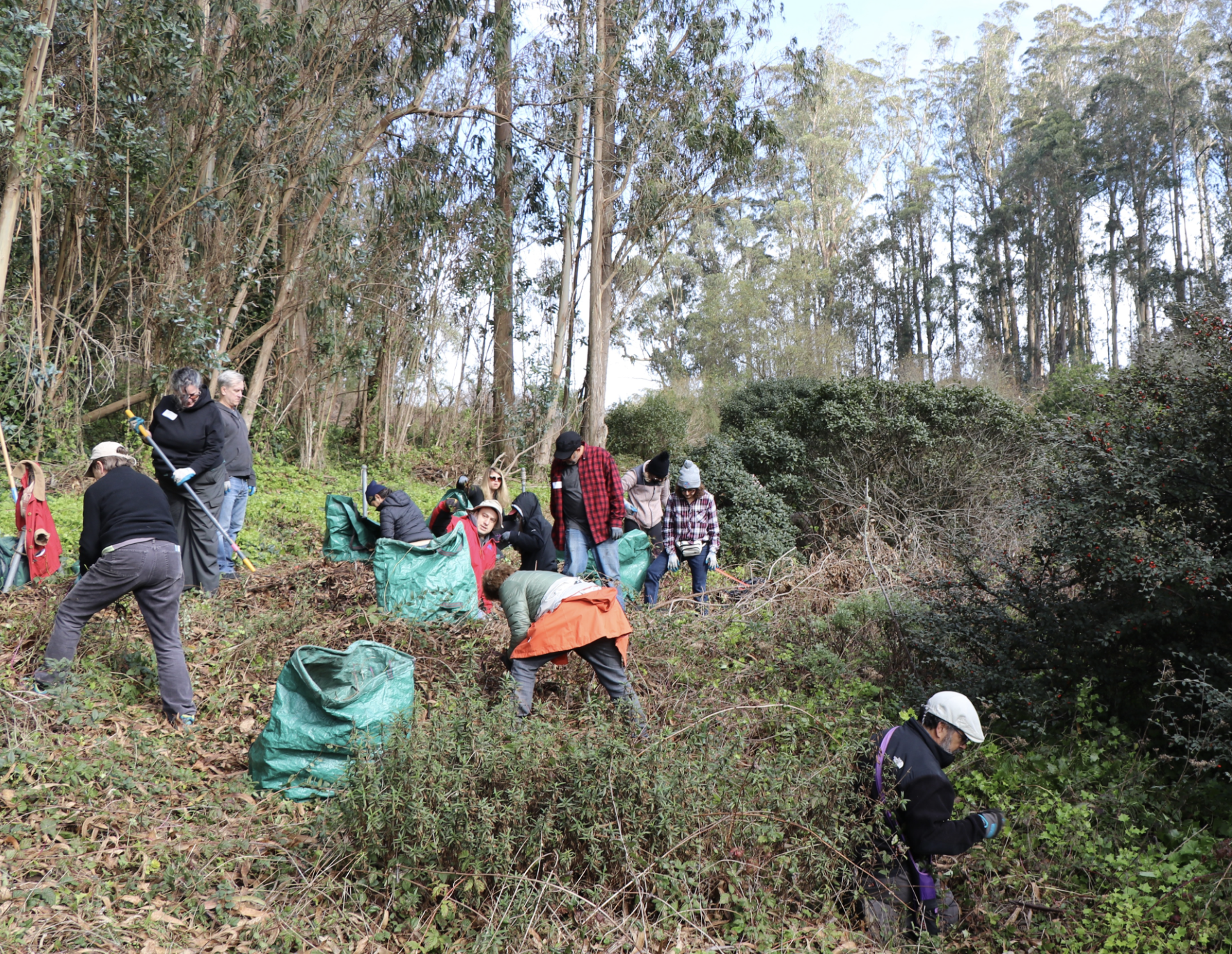
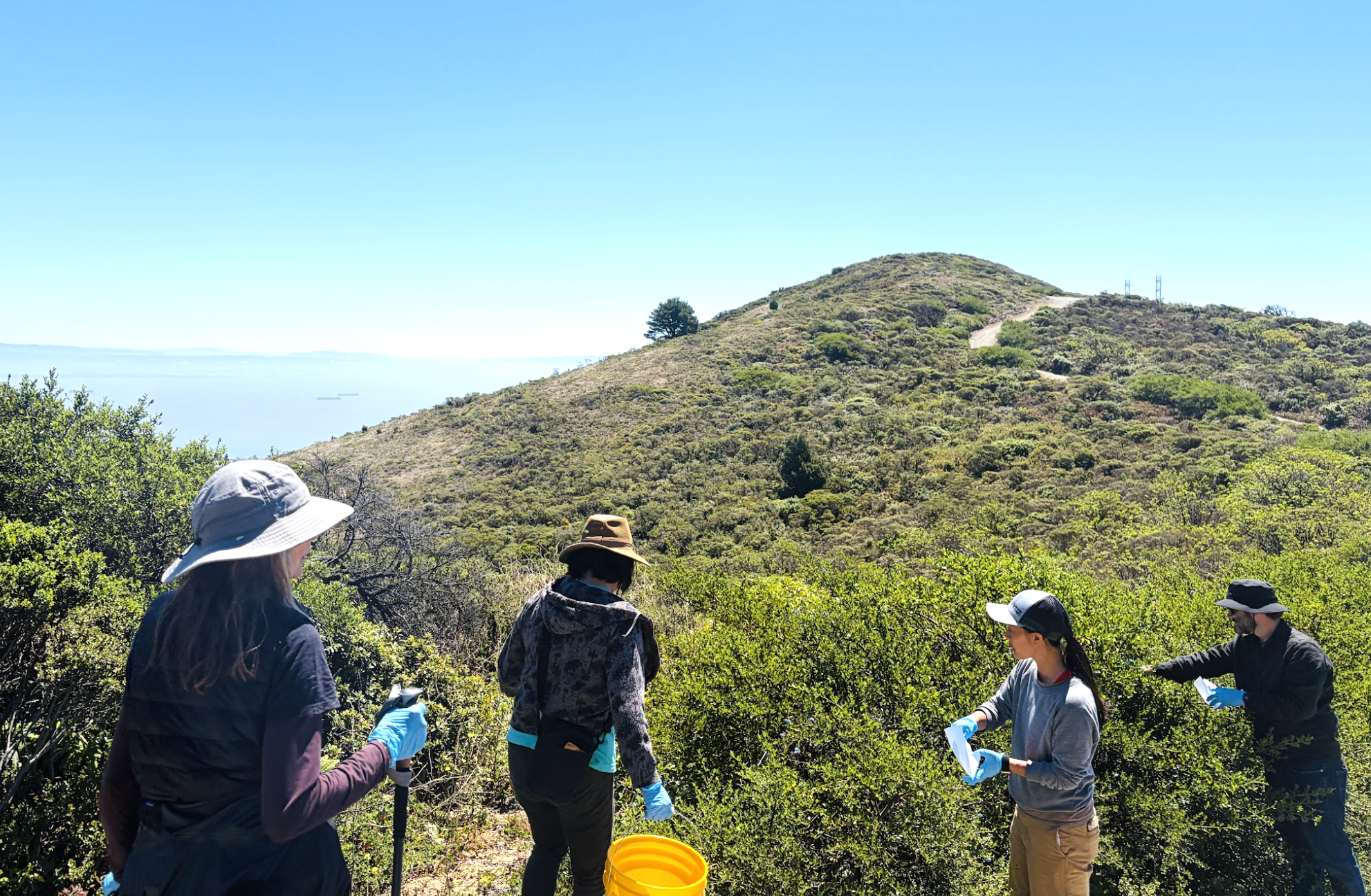
A few hundred years ago the Mountain’s ecosystems were native, devoid of species from other continents. I would imagine that our indigenous native populations might have exchanged seeds when trading with each other. During the last Ice Age when sea levels fell, the diaspora of people in eastern Asia crossing Beringia into what is now Alaska most likely brought food seeds with them. Many plants in the Kamchatka Peninsula are also found in the Pacific Northwest, including California. Between the Spaniards in Baja California and the western migration of early Americans from the original colonies, seeds were intentionally brought or accidentally introduced through domesticated animals or vehicles of transportation. It is extremely important to understand that, to preserve the maximum number of native ecosystems that are crucial to the survival of our native fauna, it requires a great deal of work on our part. You can be a big part of the solution by volunteering to help with weeding, collecting native seeds, tending to plants at the nursery, and planting them on the Mountain.
It’s not all doom and gloom on the weed front. Some natural succession is happening on its own. About a year ago I wrote that red elderberry were multiplying on the Day Camp Road and it’s also happening on the OGT. Eucalyptus logging is opening new spaces for natives to thrive. I envision some coast live oaks taking up some space in those open areas. One morning in early May a single spindly sprout of elderberry caught my eye. It was about twenty inches tall and at the top was a tiny bunch of berries! It generally takes a couple of years for plants to produce berries. This little one was not wasting any time. I have also seen more Oso berry on the Bog Trail and a creek dogwood has established itself amongst the elderberry bushes on the OGT above Colma Creek. Cow parsnip is becoming more common on the Bog and Old Guadalupe Trails, and I have been scattering seeds.
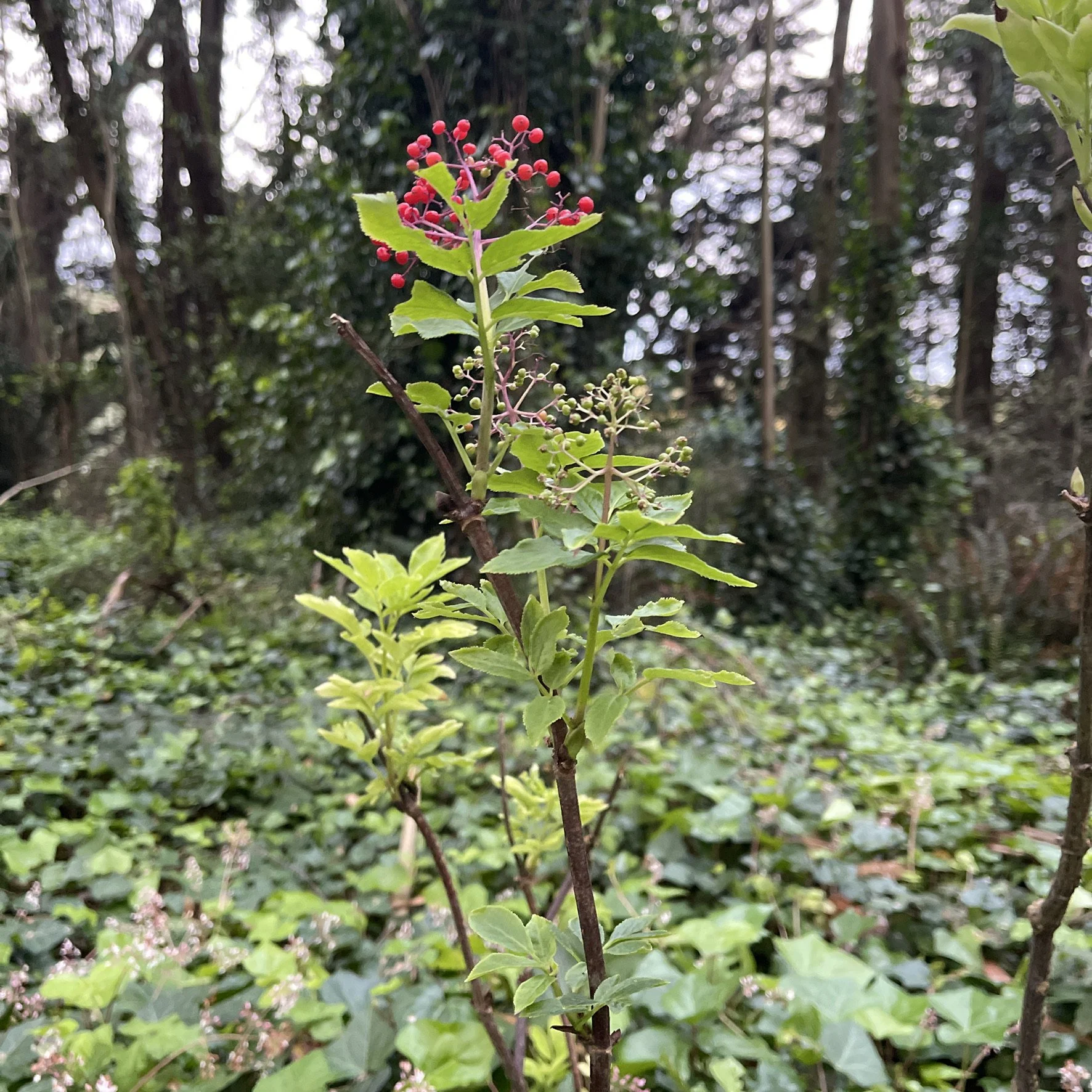
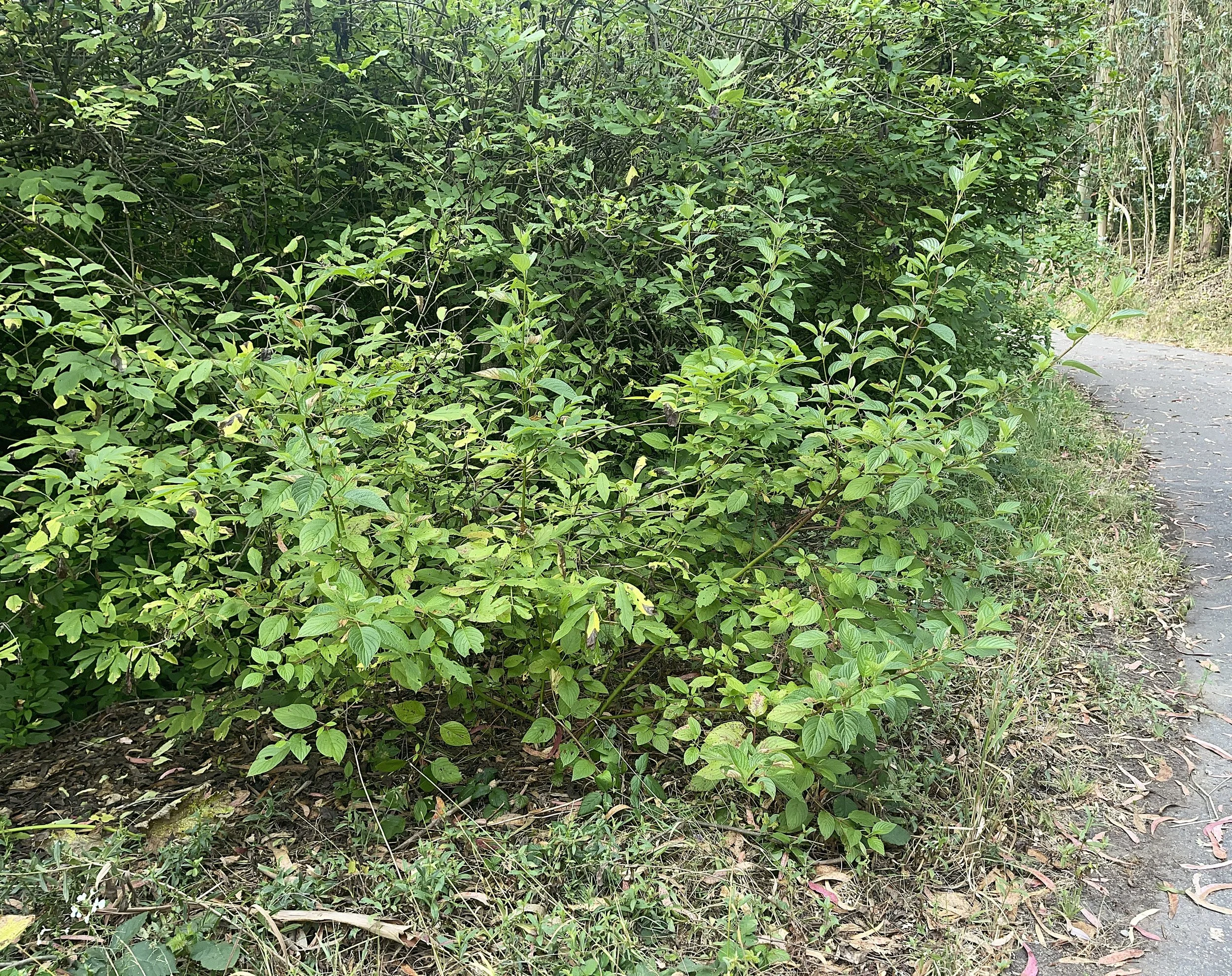
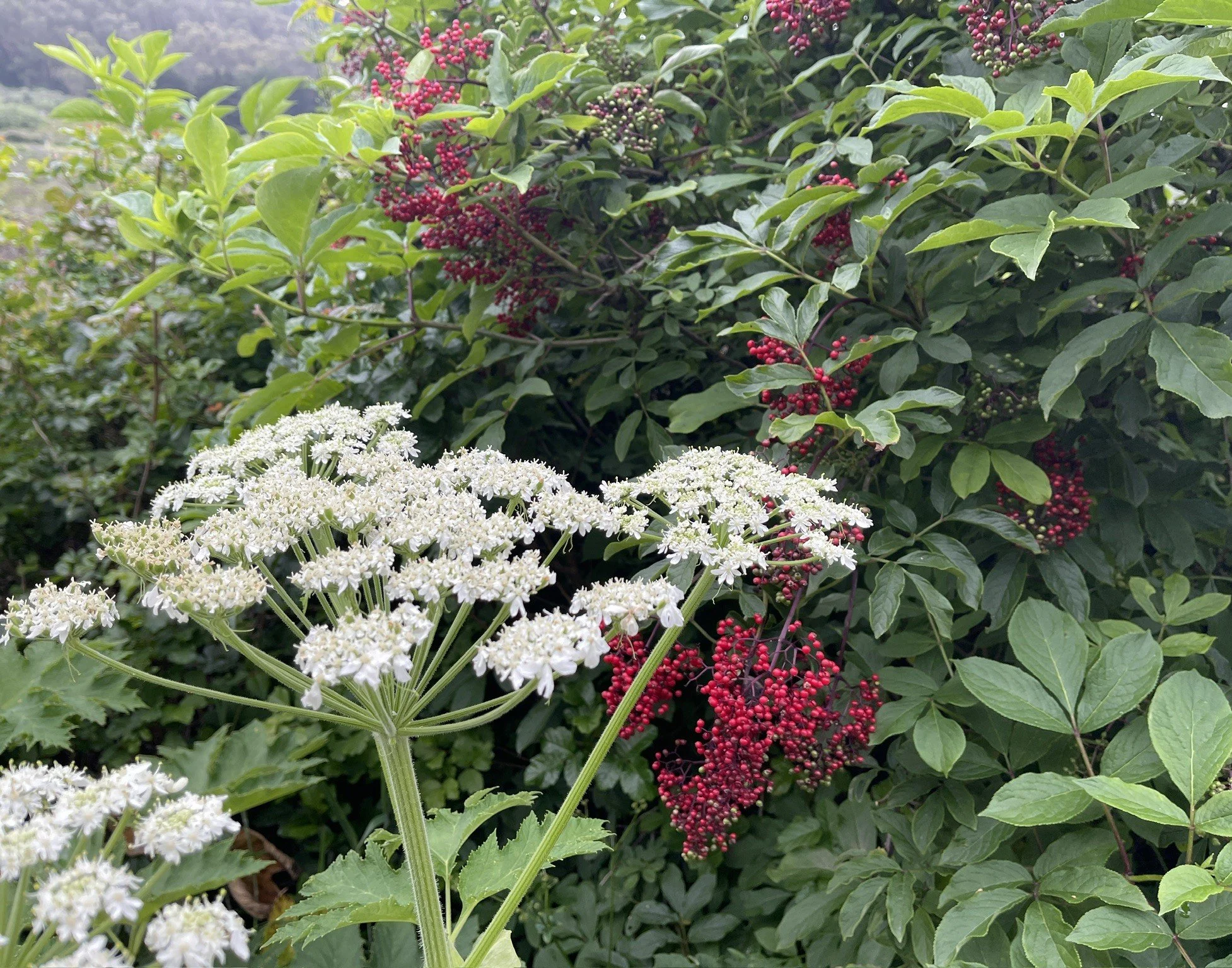
cow parsnip flowers and red elderberry
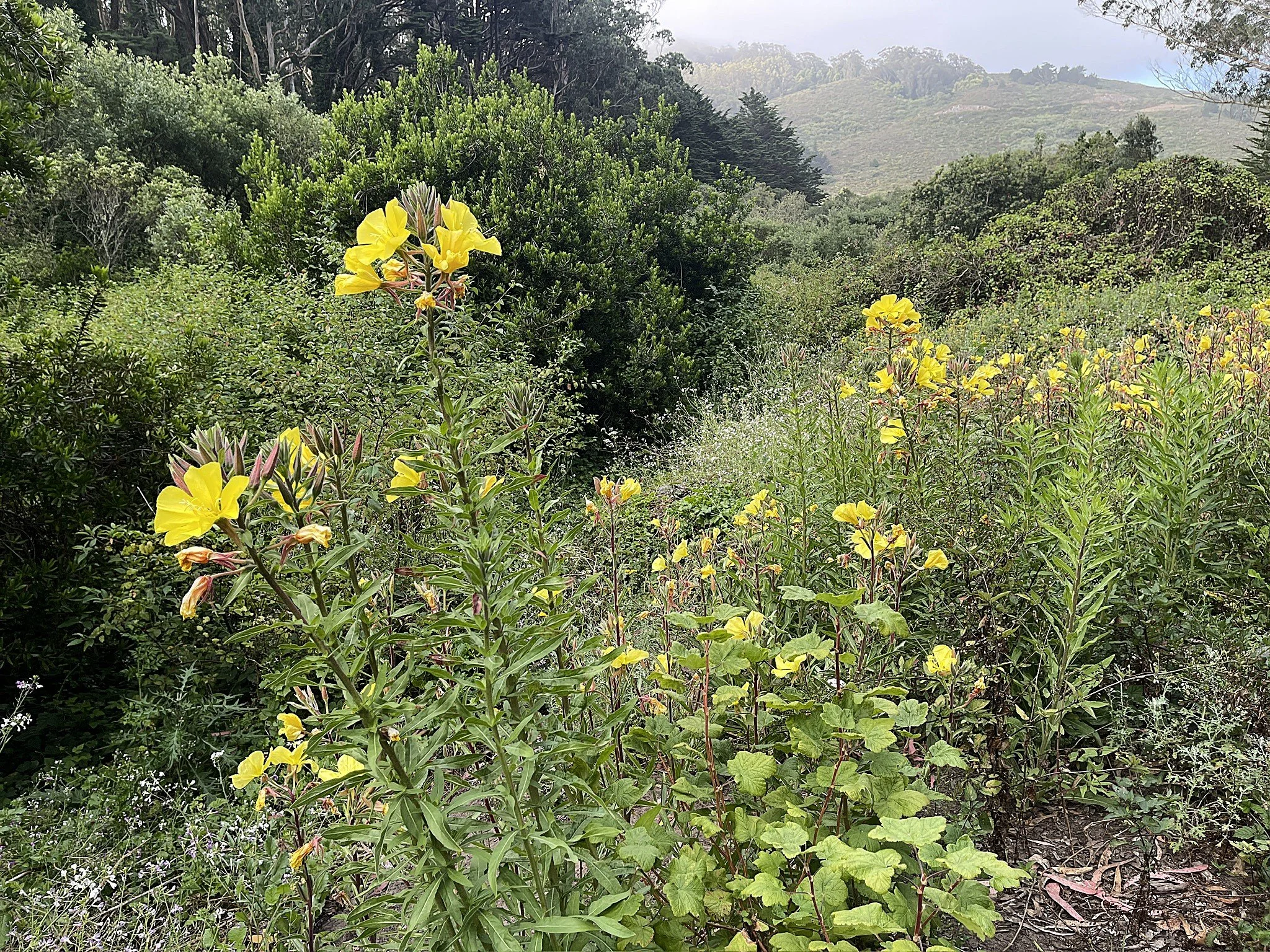
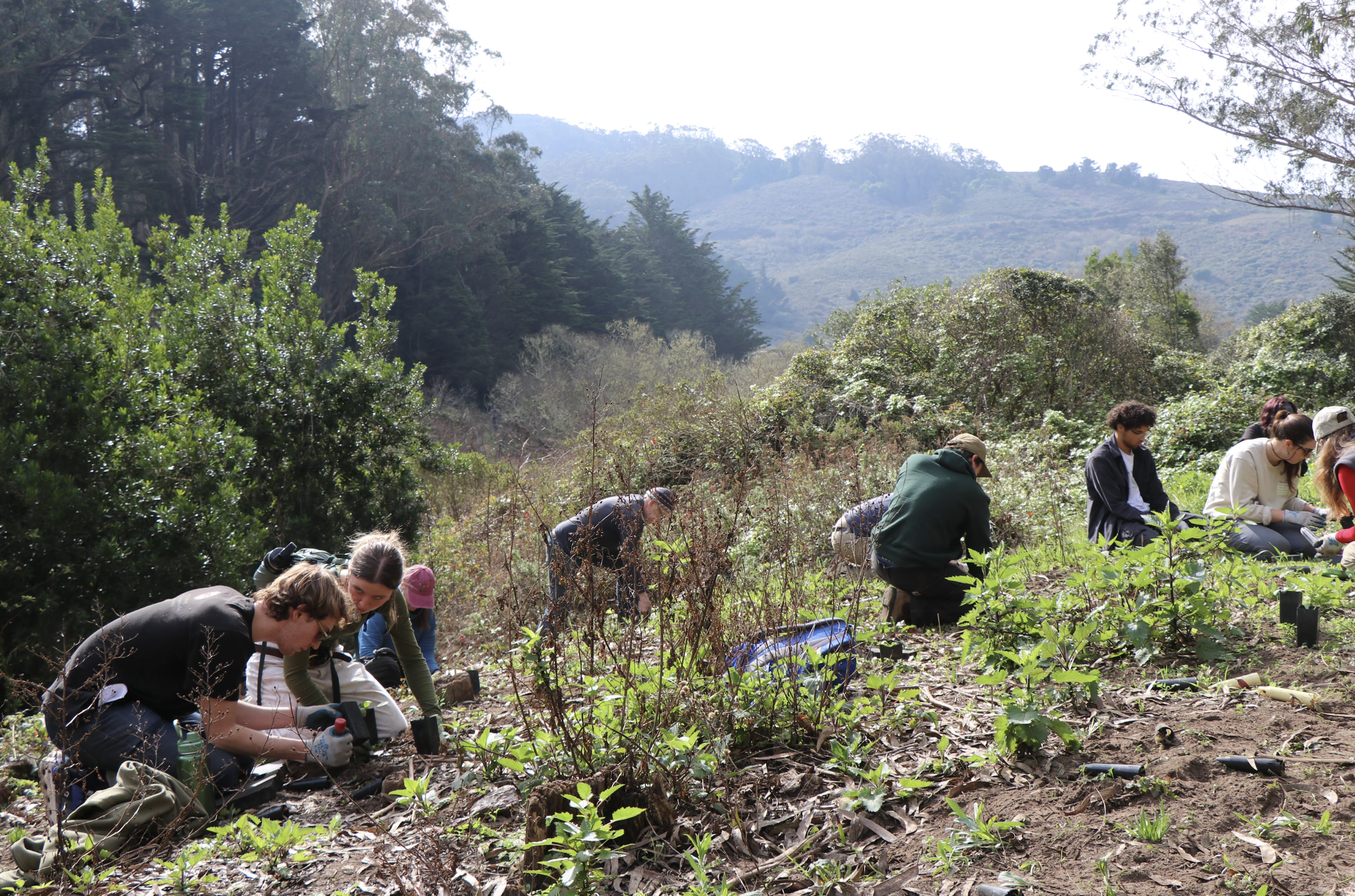
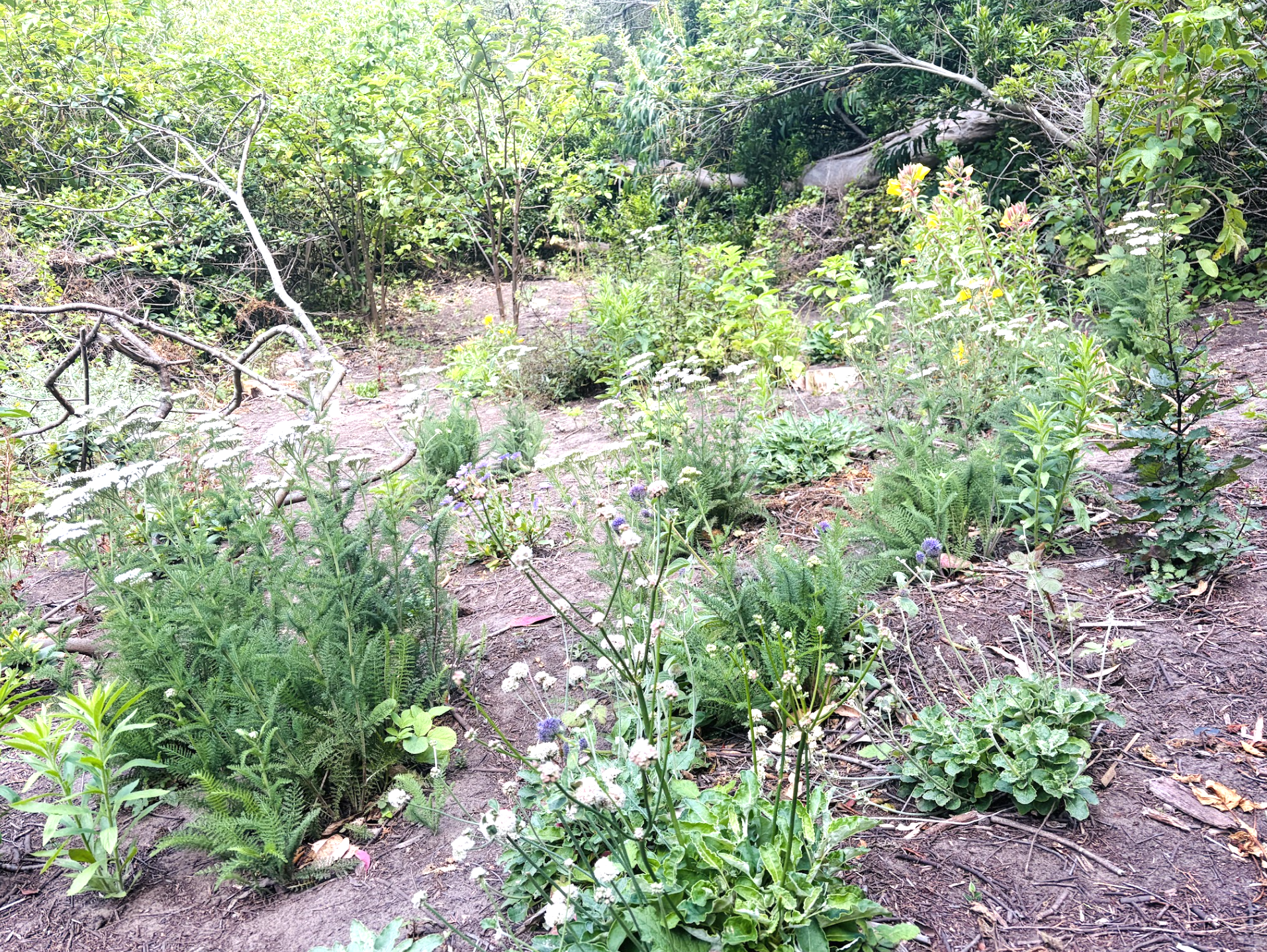
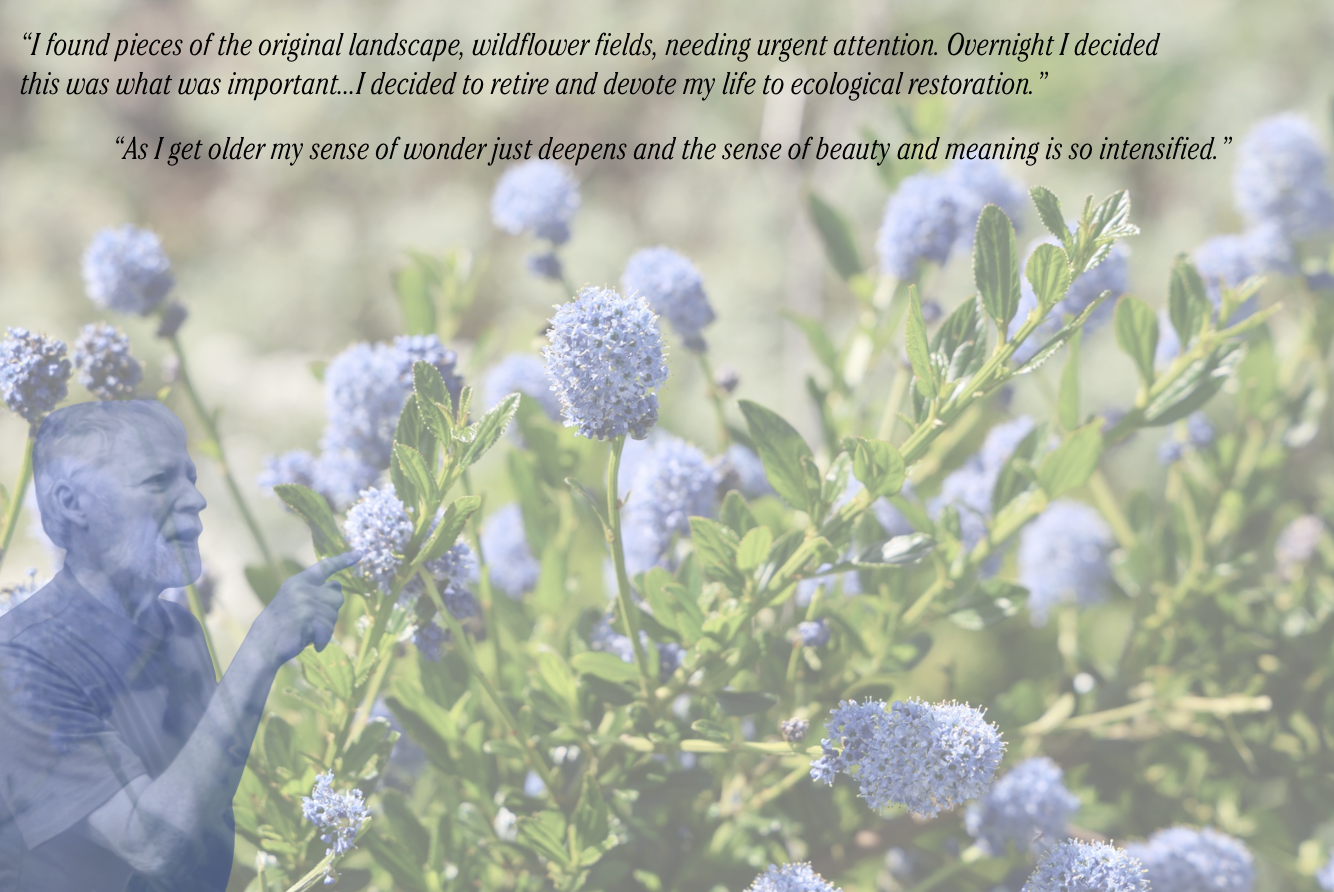
The Mountain Watch restoration on the upper Bog Trail has added some dazzling eye-candy to the landscape: evening primrose, chaparral currant, bee plant, seep and sticky monkey flower, sneeze weed, and seaside daisy. The soil in the western portion of the Saddle has a healthy dose of dune sand; a remnant of the last glacial period, 125,000-80,000 years ago when the glaciers melted, and the Mountain was literally an island.
On a somber note, a very dear friend, my mentor and legendary conservationist, Jake Sigg, passed away peacefully at home on June 10, exactly one week after his 99th birthday. A group of about 25 friends celebrated with Jake at the last place he wanted to be, San Bruno Mountain. Jake was very supportive of my Mountain Journal when it began in 1997 since it shined a light on San Bruno Mountain. His legacy will live on through his many disciples who cherish and nurture native ecosystems.
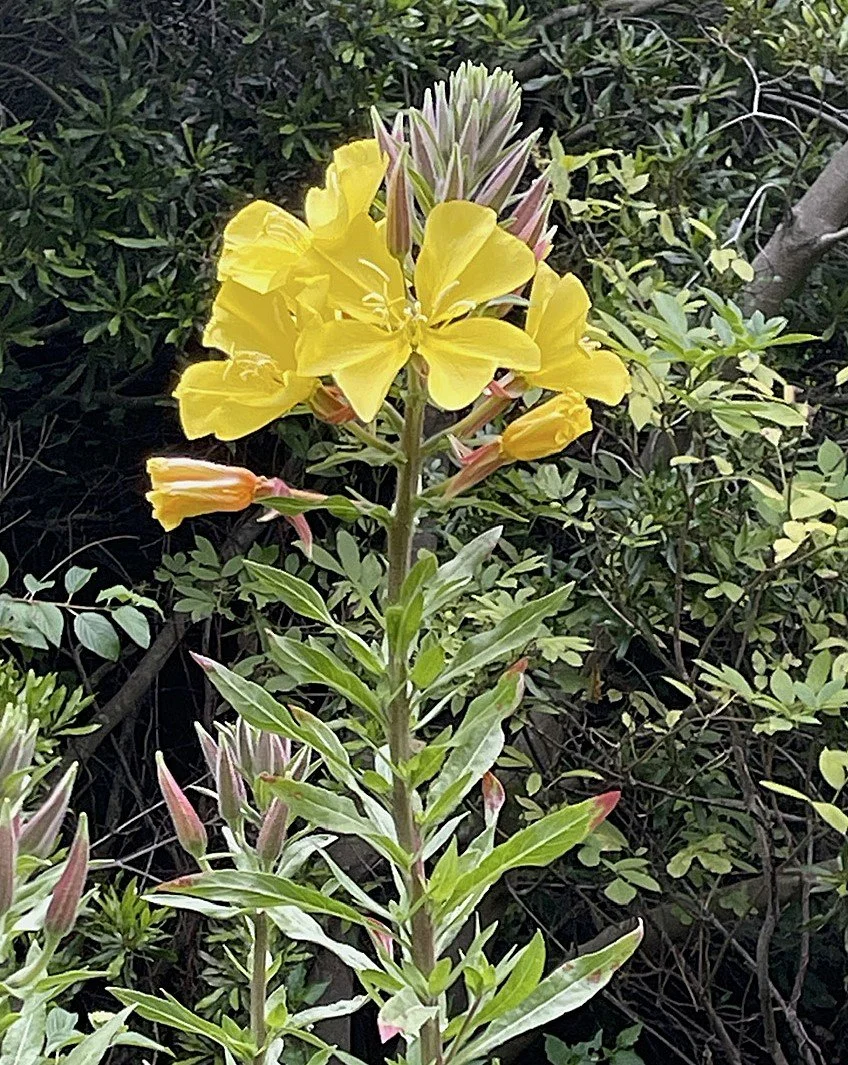
On the last morning of spring, the sun was shining and the wind was still. The lilting song of a Swainson’s Thrush was tickling my ears, and the sight of a Hooker’s evening primrose was dazzling my eyes. All is well my friends, all is well.
See you on the Mountain
Doug